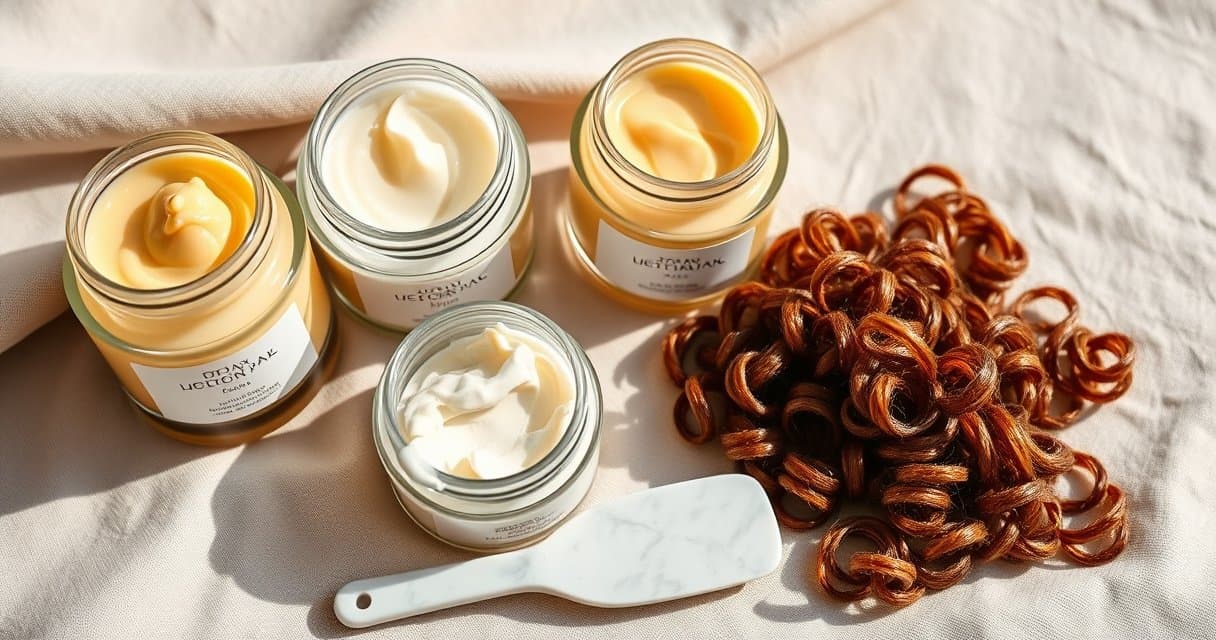
Do you spend hours taming your curls every morning? A curl mask can change everything. A real boost. Designed to deeply hydrate, define, and soothe frizz, it gives your curls the attention they deserve. Honestly, it's a must-have for anyone who wants beautiful curls without constant effort.
Key Points to Remember
- A curl mask is an intensive treatment that deeply hydrates, defines curls, and soothes frizz by acting as a targeted repairer.
- Choose the texture (creamy, jelly-like, or light) and composition (humectants, emollients, proteins) based on your curl type and porosity for optimal results.
- Apply it on towel-dried hair, leave it on for 10 to 30 minutes (under a warm towel for maximum penetration), and use it 1 to 2 times a week as needed.
- Integrate it into a consistent routine: after conditioner and before a light leave-in treatment, to complement and seal its benefits.
What Is a Curl Mask and How Does It Work?
Think about it: your curls are a more fragile structure than straight hair. Curls and waves create twisting points and angles. This is where the hair dries out the fastest, where the cuticle scales lift, allowing moisture to escape and welcoming frizz. The role of a curl mask is precisely to fill these gaps, to act as a targeted reparative treatment that goes far beyond a simple conditioner.
Hydration, But Not Just Any Kind
A good mask for curly hair doesn't just deposit a superficial layer of silicone that weighs it down. Its goal is to penetrate. It typically contains humectants like glycerin or honey, which attract and retain water inside the hair fiber. Imagine a dry, cracked sponge regaining its flexibility. That's the effect. For visible results, we often talk about an application of at least 5 to 10 minutes, the time needed for the active ingredients to work. On very dry or treated hair, leave it on for 20 minutes, or even longer under a warm towel to open the cuticles and maximize penetration.
Defining and Taming Without Weighing Down
This is where the magic happens. By restoring hydration, the mask helps to reform the keystone of curls: the hydrolipidic film. Curls are more clumped together, more elastic, less prone to breakage when manipulated. Light texturizing agents (like certain plant butters or rice proteins) help sculpt the curl without locking it in a sticky or pasty texture. A trap to absolutely avoid! If your mask leaves a greasy film or a residue sensation, it's not made for your hair's porosity type.
The Crucial Difference with Other Treatments
To be clear, here is what sets it apart:
- Vs. Conditioner: Conditioner is a surface treatment, a quick rinse to facilitate detangling. The mask is an intensive treatment. It's not used with every shampoo, but 1 to 2 times a week depending on needs.
- Vs. Leave-in conditioner: The leave-in protects and seals in hydration after washing. The mask works during washing to rebuild that hydration. They are complementary, not interchangeable.
Frankly, investing in a proper, suitable mask saves time for the rest of the week. Less fighting frizz, curls that hold their shape better, and a feeling of healthier hair to the touch. It's the secret partner to a successful hair care routine.
Deciphering Ingredients and Textures
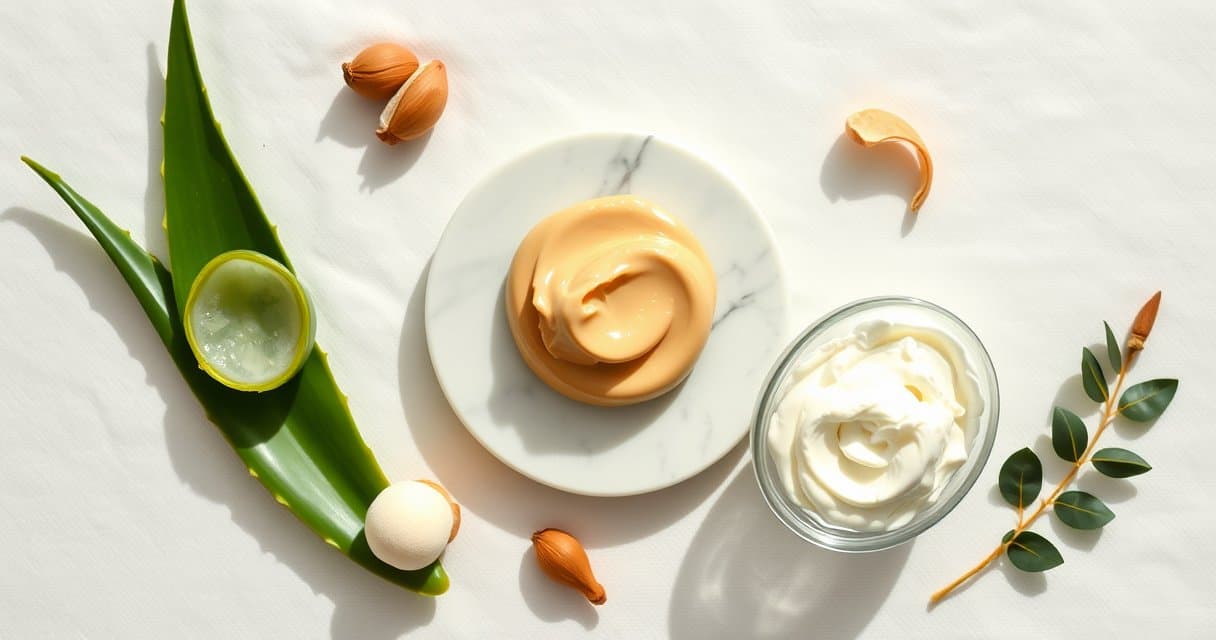
Reading the INCI list on the jar is often daunting. However, it's the only way to truly understand what you're about to apply to your curls. Don't just rely on marketing that promises "perfect definition" or "intense hydration." Look under the hood. The first five ingredients make up the bulk of the formula.
The Allies to Absolutely Look For
Everything hinges on the balance between two families of active ingredients: humectants and emollients.
- Humectants attract water. Look for glycerin, honey, panthenol (vitamin B5), or hyaluronic acid. They are perfect for curls that lack flexibility and are thirsty.
- Emollients seal in this moisture and smooth the hair fiber. This is where butters (shea, mango) and oils (coconut, avocado, jojoba) come into play. For a better hair mask for dry, thick curls, a shea butter well-positioned in the list is a very good sign. For fine curls, favor lighter oils like jojoba or sweet almond, which nourish without weighing down.
Don't forget proteins (wheat, rice, hydrolyzed keratin). In small doses, they repair the micro-cracks in the cuticle. But beware of excess: too much protein on already brittle or low-porosity hair, and it's a disaster – your curls become rough and brittle like straw. Once a week for maintenance is often more than enough.
Textures, a Matter of Feeling (and Porosity)
Texture isn't just about sensory pleasure. It tells you about the concentration and behavior of the product.
- Creamy and rich: Often loaded with butters, it's ideal for high-porosity or very thick hair that drinks up the treatment. It should spread easily without pulling on the curls.
- Gel-like or "butter" (melting butter): My favorite for deep hydration without heaviness. It melts on contact with the hand and penetrates quickly. Perfect for medium to fine curls that want nourishment without being weighed down.
- Airy texture, like a mousse: More rare, but great for very fine curls or refresh days. It doesn't smother the movement.
A foolproof test? Take a pea-sized amount of product and spread it between your fingers. If it melts and becomes almost oily, it## Deciphering Ingredients and Textures
Reading the INCI list on the jar is often daunting. However, it's the only way to truly understand what you're about to apply to your curls. Don't rely solely on marketing that promises "perfect definition" or "intense hydration." Look under the hood. The first five ingredients make up the bulk of the formula.
The Allies to Absolutely Look For
Everything hinges on the balance between two families of active ingredients: humectants and emollients.
- Humectants attract water. Look for glycerin, honey, panthenol (vitamin B5), or hyaluronic acid. They are perfect for curls that lack flexibility and are thirsty.
- Emollients seal in this moisture and smooth the hair fiber. This is where butters (shea, mango) and oils (coconut, avocado, jojoba) come into play. For a better hair mask for dry, thick curls, a shea butter well-placed in the list is a very good sign. For fine curls, favor lighter oils like jojoba or sweet almond, which nourish without weighing down.
Don't forget proteins (wheat, rice, hydrolyzed keratin). In small doses, they repair the micro-fissures in the cuticle. But beware of excess: too much protein on already brittle or low-porosity hair, and it's a disaster – your curls become rough and brittle like straw. Once a week for maintenance is often more than enough.
Textures, a Matter of Feeling (and Porosity)
Texture isn't just about sensory pleasure. It tells you about the concentration and behavior of the product.
- Creamy and rich: Often loaded with butters, it's ideal for high-porosity or very thick hair that drinks up the treatment. It should spread easily without pulling on the curls.
- Jelly or "butter" (melting butter): My favorite for deep hydration without heaviness. It melts upon contact with the hand and penetrates quickly. Perfect for medium to fine curls that want nourishment without being weighed down.
- Airy texture, like a mousse: More rare, but great for very fine curls or refresh days. It doesn't smother movement.
A foolproof test? Take a hazelnut-sized amount of product and spread it between your fingers. If it melts and becomes almost oily, it's a good sign for penetration. If it remains a distinct greasy body, it risks coating without penetrating – perhaps reserve it for ends only.
Frankly, be wary of endless ingredient lists where everything is in homeopathic doses. A formula with 10 well-chosen and well-dosed ingredients will always be more effective than a cocktail of 30 where you only find water and silicones at the top. Aim for simplicity and clarity.
Our Selection
For curly, frizzy, or wavy hair, finding a mask that nourishes without weighing down, defines without stiffening, and makes detangling easier is often a quest. We analyzed three very popular French conditioning masks, all formulated with a high content of ingredients of natural origin and without silicone. Here is our comparative selection to help you see more clearly.
| Product | Format & Origin | Key Active Ingredients | Strengths | Versatility of Use |
|---|---|---|---|---|
| Coco Curl Conditioner Mask | 300 ml - Made in France | Organic coconut oil, shea butter | Clean composition, coconut scent, B Corp & vegan brand | 2 in 1 (mask or conditioner) |
| Garnier Fructis Hairfood Cocoa Mask | 320 ml - Made in Germany | Cocoa butter, Vitamins C, E, F | Rich texture, long-lasting nourishment (72h) | 3 in 1 (conditioner, mask, leave-in treatment) |
| Acticurl Conditioning Mask | 300 ml - Made in France | Pitaya extract, aloe vera, glycerin | Intensive detangling, reparative formula, historic brand | Targeted mask use (long application recommended) |
Coco Curl Conditioner Mask
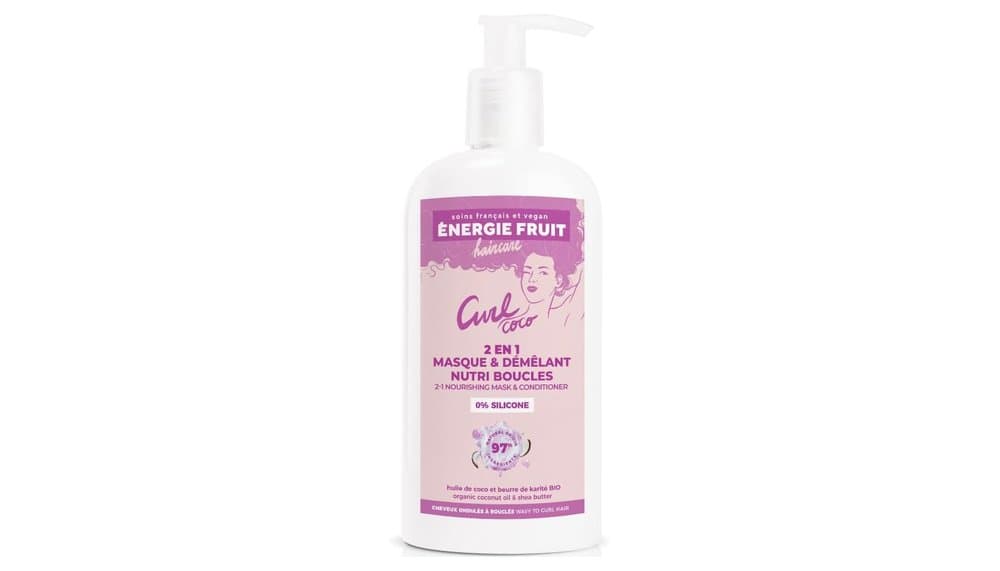
On paper, the specs promise a Made in France product with strong commitments: a formula with 97% natural origin, vegan, PETA certified and silicone-free. The Energie Fruit brand is also B Corp certified, a notable point for consumers attentive to ethics. The 2 in 1 claim is central: this product can be used as a mask to leave on for several minutes or as a quick conditioner on busy days.
According to user feedback, it is especially its highly appreciated coconut scent and its creamy texture that win people over. The community notes that the product effectively nourishes the lengths, leaving curls more supple and defined, with good bounce. It seems particularly suited for wavy to curly hair that needs nourishment without being weighed down.
However, the analysis of reviews also reveals some limitations. For some people with very dry or coily hair, the level of nourishment can prove insufficient with a single use and require regular or longer application. A few comments also point out that, on fine hair, it is necessary to rinse thoroughly to avoid any weighing effect. In summary, it's an excellent ethical entry-level product for a daily or weekly routine, but it doesn't work miracles on extreme damage.
Garnier Fructis Hairfood Cocoa Mask
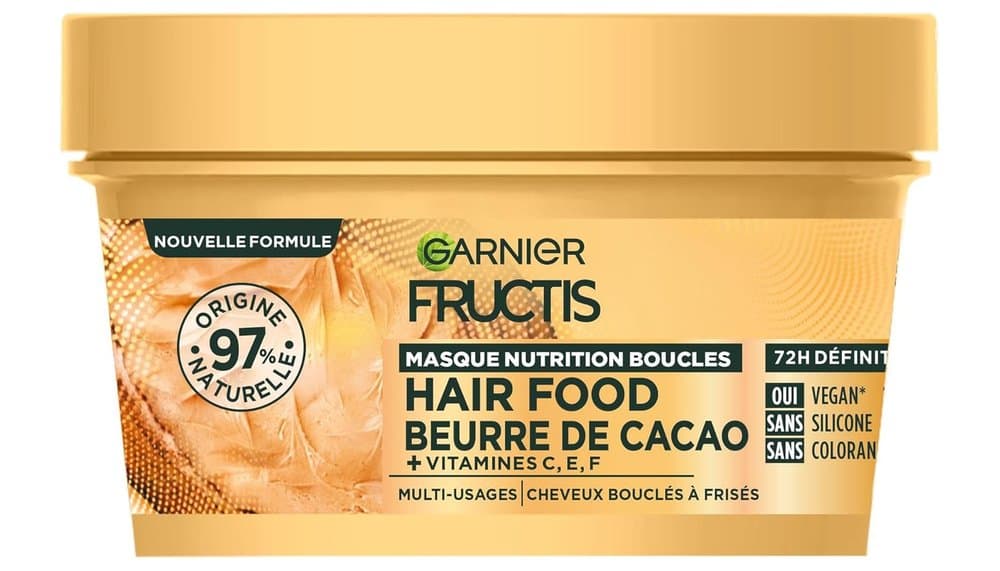
With this mask, Garnier focuses on versatility and mass-market effectiveness. Its formula, also 97% natural origin and silicone-free, is distinguished by its cocoa butter and enrichment with vitamins C, E and F. The key marketing point is the promise of curl definition for 72 hours, based on instrumental tests.
The community is overall very satisfied, as evidenced by its excellent rating. Reviews highlight several strengths: a rich and indulgent texture that is immediately pleasing to the touch, a pleasant cocoa scent, and, above all, a real ease of detangling. The 3 in 1 versatility (conditioner, mask, leave-in) is highly appreciated for its practicality, allowing adaptation to the day's needs.
The reported limitations are mainly linked to this rich texture. On the finest hair or curls with low density, some users note it can slightly weigh the hair down if the amount isn't perfectly controlled, especially when used as a "leave-in". Furthermore, although the formula is vegan, it is not as "clean" as that of Coco Curl with a slightly longer ingredient list. This is the choice for reliability and proven effectiveness on a large scale, with very good staying power.
Acticurl Conditioning Mask
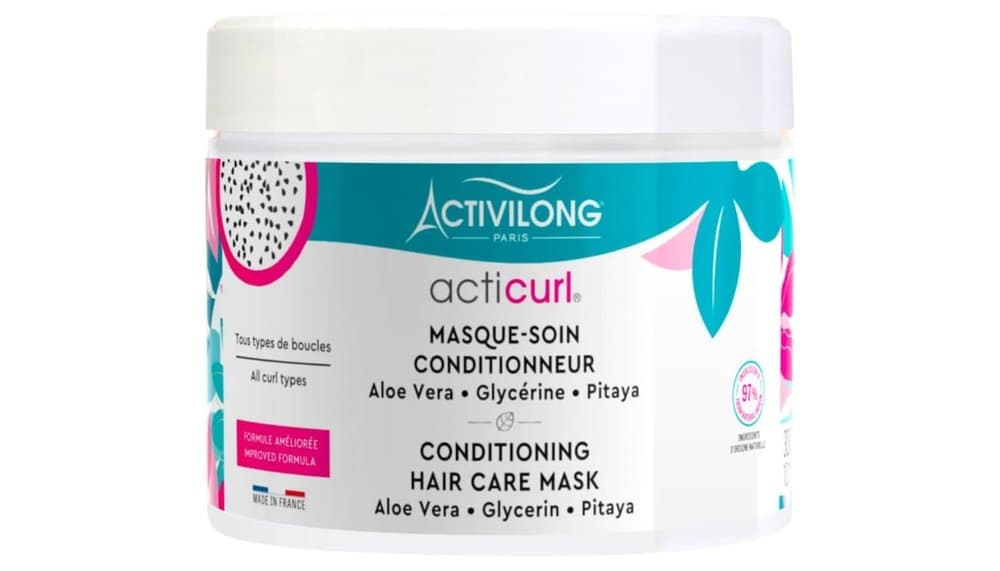
Activilong is a historic French brand specializing in textured hair, and this is reflected in the approach of this mask. Here, the emphasis is on intensive reparative care and detangling. The 97% natural origin formula relies on a trio of different active ingredients: pitaya extract (rich in vitamin C), aloe vera, and glycerin for deep hydration.
Customer feedback converges on one point: it is an excellent detangler. Users with tight, thick, or very dry curls report that the product greatly facilitates combing, limits breakage, and leaves hair supple and shiny. The brand recommends a long application (minimum 15 min, under a heat cap or plastic wrap), making it a targeted, weekly treatment rather than an everyday product.
The points of caution mentioned mainly concern the texture, which some find less creamy and a bit more "watery" than that of the competitors, and the aloe vera scent which, although fresh, may not suit everyone. It is less versatile than the other two, as it is specifically designed for use as a deep mask. It is therefore the ideal candidate for those primarily seeking an effective reparative and detangling treatment as part of a dedicated routine, with the backing of a specialized brand.
Choosing the Right Product for Your Curl Type
This is where it all really happens. Applying a mask that's too rich on fine curls, or too light on thick manes, is a waste of time and money. The best curly hair mask for you is first and foremost the one that speaks the language of your hair's nature. Forget universal promises, they don't exist.
For Fine, Low-Porosity Curls
The challenge? Providing hydration and body without weighing them down, without smothering the already fragile spring. Avoid textures that are too thick and pure butters. Opt for lightweight formulas, often in a gel or milky cream texture. Look for keywords like "volume," "lightweight," or "no residue." Light proteins (rice, silk) can help provide temporary structure. Apply it mainly to the lengths and carefully avoid the roots. A good test: if your curls feel heavier and droopy 30 minutes after shampooing, the mask is too rich for you.
For Thick, Dry, and High-Porosity Curls
Here, it's the opposite. Your curls are thirsty and need a truly rich meal. Creamy, rich textures with butters (shea, mango) in a good position are your allies. You can aim for more concentrated formulas, even a so-called "reconstructive" hair mask once a month if your hair is damaged. Don't be afraid to apply it generously, from roots to ends. The processing time is crucial: leave it on for at least 15-20 minutes, under a warm towel if possible, for maximum penetration.
See priceFor Defined but Dehydrated Curls (Type 3a-3c)
Your curls have a beautiful shape but often lack flexibility and shine? The perfect balance lies between powerful humectants (glycerin, aloe vera) and light to medium oils (avocado, jojoba). Avoid products that leave a greasy film or, on the contrary, a "crunchy" effect. The desired result is a soft, bouncy, and shiny curl. A tip: on towel-dried hair, apply a light leave-in conditioner first, then your mask on top. This seals in deep hydration.
The Special Case of Colored or Chemically Treated Hair
If your curls are bleached or undergo Brazilian blowouts, they are weakened and more porous. Your absolute priority is repair and sealing the cuticle. Look for masks with light film-forming agents (like certain volatile silicones such as dimethicone) and hydrolyzed proteins. They act as a temporary dressing, smoothing out the cuticle scales and strengthening the hair fiber. The color will also hold better. Frankly, in this case, investing in a specialized mask makes a huge difference compared to a universal treatment.
Application and Frequency for Visible Results
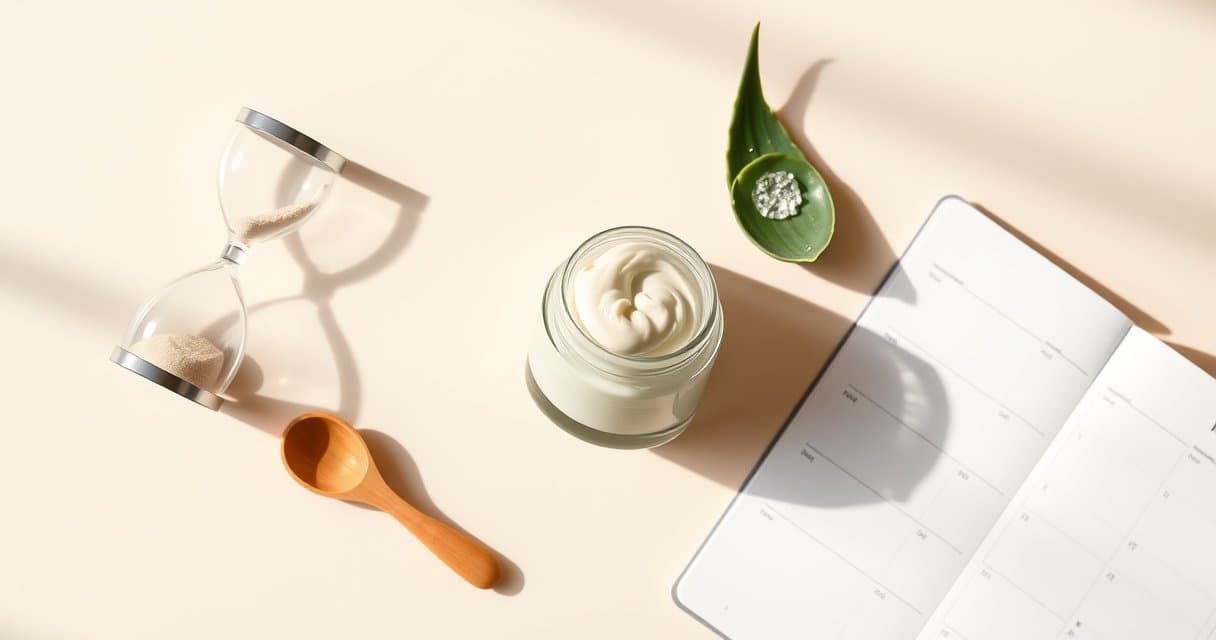
Having the best curly hair mask in your cupboard is useless if you use it incorrectly. It's like a great cooking ingredient you let burn in the pan. Technique and regularity make up 70% of the result, believe me.
The Correct Application Method, Step by Step
First rule: apply it to hair that has been squeezed out, not soaking wet. Hair that no longer drips. Why? Because excess water prevents the product from penetrating properly. Take a hazelnut-sized amount, emulsify it between your palms, then apply section by section, focusing on the ends, which are often drier. For thick curls, don't hesitate to take two or three hazelnut-sized amounts. Use a wide-tooth comb to distribute it evenly. This simple gesture ensures that every curl is nourished, without waste.
The Processing Time: The Forgotten Secret
This is where everything happens. A mask is not a conditioner you rinse off in 30 seconds. For standard hydration, aim for 10 to 15 minutes. For deep repair on very dry or damaged hair, go up to 20-30 minutes. Foolproof tip: wrap your hair in a warm towel (pre-warmed on a radiator or slightly dampened and microwaved for 20 seconds). The heat opens the hair cuticles and drives the active ingredients in like nothing else. It's the expert level.
How Often? Find Your Rhythm
There is no single answer. It all depends on the condition of your curls and your routine.
- For maintenance (healthy curls): once a week or every 10 days is more than enough. It's the weekly rejuvenating treatment.
- For an intensive course (dryness, bleaching, summer/winter): you can increase to twice a week for a month. Then, return to a maintenance rhythm.
- For very fine curls: sometimes, once every two weeks is sufficient, especially if you use nourishing leave-in products in between.
A telltale sign? If your hair becomes limp, greasy quickly, or loses its bounce, you're overdoing it. Space out the applications. Conversely, if it's rough, frizzy, and thirsty two days after shampooing, increase the frequency. Listen to your hair, it's your best guide.
Integrating the Mask with Your Other Treatments and Tools
A curly hair mask is not an island. For me, it's the centerpiece of a haircare ecosystem. Having it work in harmony with your other products and tools is where the real magic happens and you get the full potential of your best curly hair mask.
The Ideal Washing Routine Sequence
Don't throw away your conditioner! Use it. The winning routine is often: gentle shampoo, conditioner on the lengths to detangle, then mask. Why this order? The conditioner does the heavy lifting of detangling, which allows the mask to focus on its mission: nourishing and repairing, without being diluted by the friction of the comb. Rinse out the conditioner, apply the mask, leave it on, rinse with cool water. Cool water closes the hair cuticles and seals in the benefits. Simple, but terribly effective.
What's the Role of Leave-In Conditioners?
It's the question that comes up all the time. After rinsing out your mask, your hair is deeply nourished. There's no need to add an ultra-rich leave-in cream, you'd smother your curls. Opt instead for a light milk or mousse, or even just a gel to define curls if they are thick. The leave-in complements the action of the mask, it doesn't duplicate it. Personally, on mask days, I use half as much leave-in as usual.
Maximizing Results with Your Heat Styling Tools
Do you use a diffuser or a curling iron? The mask is your best ally for preparation and protection.
- Before the diffuser: After your mask and your leave-in routine, use a thermal protection spray or cream. Hair well-hydrated by the mask withstands heat much better and retains its definition longer.
- Before a curling iron or flat iron: Here, it's crucial. A weekly mask on heat-damaged hair is a must. It fills in the gaps in the hair fiber. On the day you use an iron, apply a thermal protection spray on dry or almost dry hair. Never on wet hair, as this can create a layer that cooks. Your iron will glide better, and your ends will have less of that fried, dry look after a few weeks of this routine.
Honestly, a mask used alone is good. A mask integrated into a thoughtful routine is guaranteed transformation.
Conclusion
There you have it, all the keys in hand. The curl mask is no longer a mystery.
Choose it with intention, adapt it to your curls, and integrate it into your routine. The results speak for themselves: softer, shinier curls that are much easier to manage.
So, ready to give it a chance? Your curls will thank you.
Frequently Asked Questions
What is the best mask for fine curls?
A mask for fine curls should have a lightweight texture, like a gelée or milk, and avoid overly rich butters so as not to weigh hair down. Look for keywords like "no residue" or "lightweight" and apply it mainly to the lengths while avoiding the roots.
How to apply a curl mask correctly?
Apply the mask to towel-dried hair, section by section, focusing on the ends, then leave it on for 10 to 15 minutes. For optimal penetration, wrap your hair in a warm towel to open the hair cuticles.
How often should you use a curl mask?
Use a curl mask once a week for maintenance, or twice a week for an intensive treatment over a month. Space out applications if your hair becomes limp or greasy quickly.
What is the difference between a mask and a conditioner for curls?
A mask is an intensive reparative treatment to deeply nourish and hydrate, used once a week, while a conditioner is a daily product that mainly facilitates detangling.
Should you apply a mask before or after conditioner?
Always apply the mask after the conditioner, once your hair is detangled, so it can focus on repair without being diluted by the detangling step.
Free content, no sponsors — Our editorial process is fully independent and receives no brand funding. Some links are affiliate links: if you purchase through them, we earn a small fee, at no additional cost to you.
Guides you might like
Automatic Loopers: Buying Guide
Get effortless, long-lasting curls. Our guide helps you choose the right automatic curling iron for your hair type and perfect results.
Curling Short Hair
Rediscover your short hair! Learn how a curling iron sculpts your cut, adds movement, and defines curls with the right technique and barrel size.
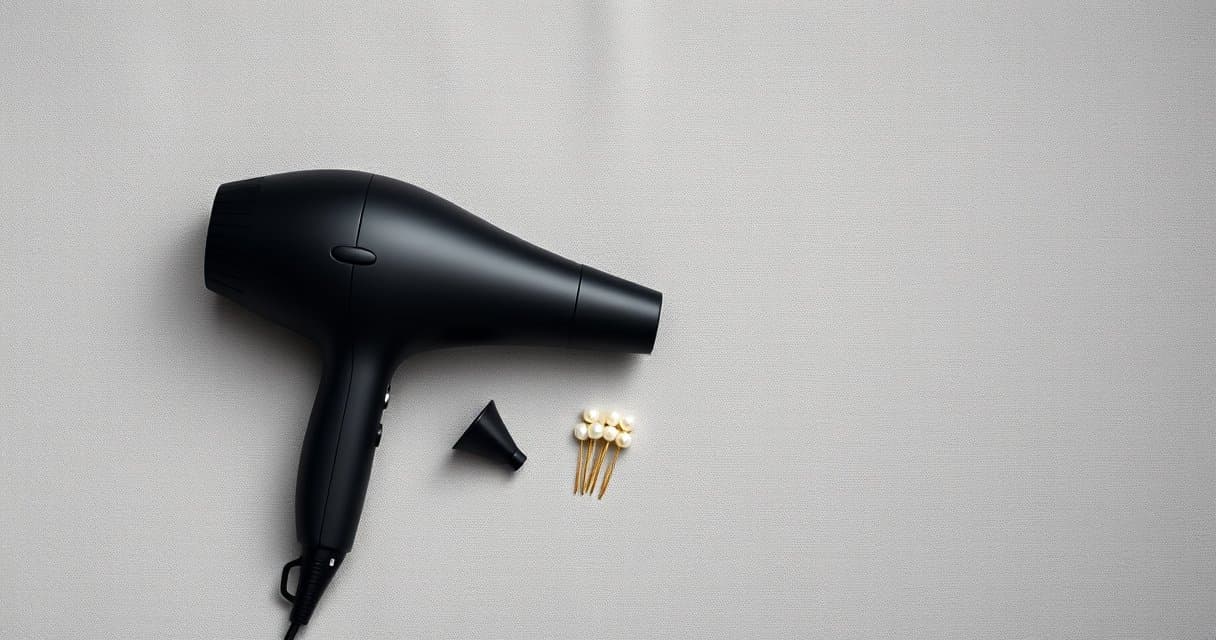
Guide To Choosing A Pro Hair Dryer
Struggling with dull, frizzy hair? A professional hair dryer can transform your routine. Learn how to choose the right one without overspending.
Articles you might like
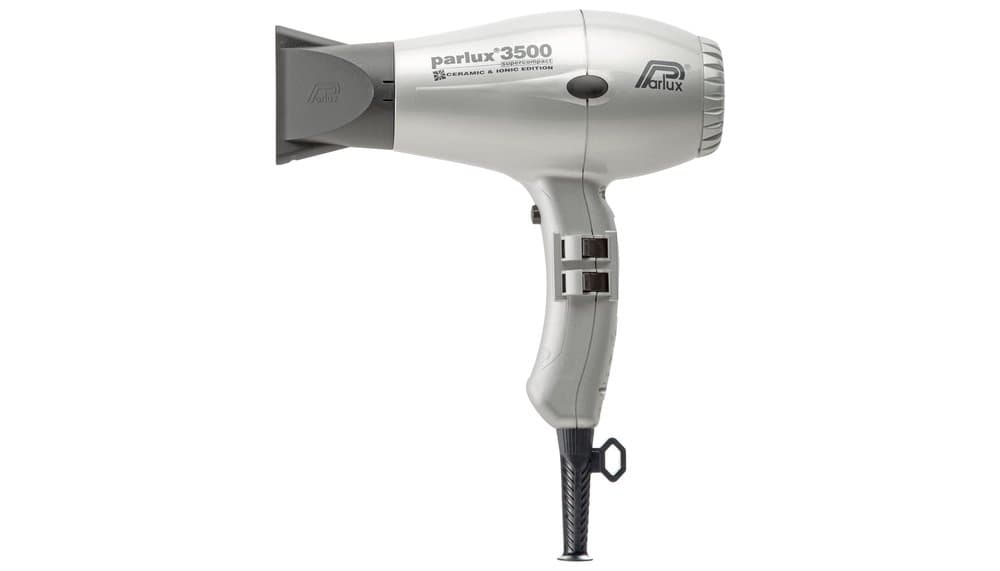
Parlux Supercompact 3500 Hair Dryer Review and Test
Powerful Parlux Supercompact 3500 hair dryer review: Professional ionic & ceramic performance for fast, healthy drying on all hair types.
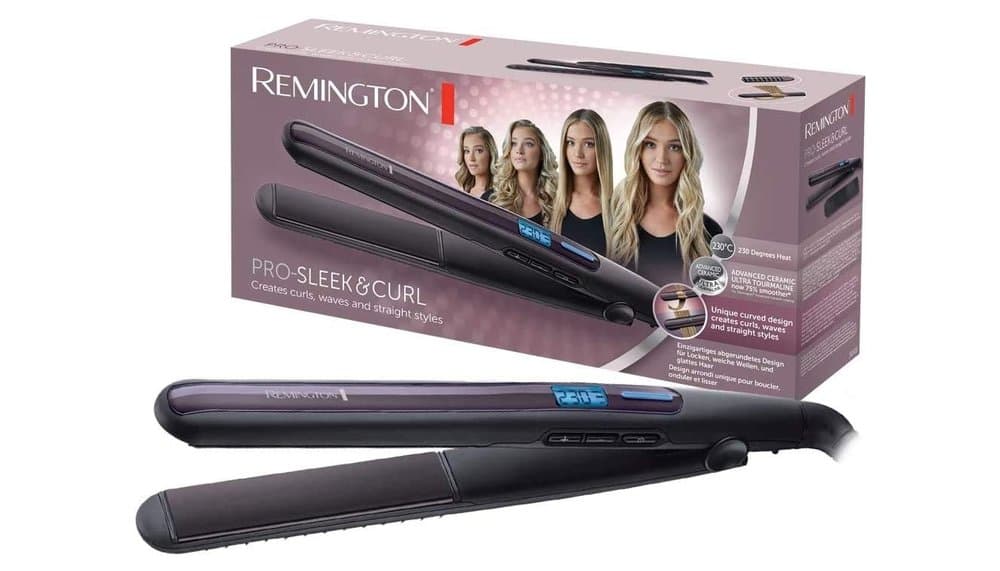
Remington S6505 Sleek&Curl 2-in-1 Hair Straightener Review
Review: Does the Remington S6505 2-in-1 straightener and curler protect hair health while performing well on all hair types?
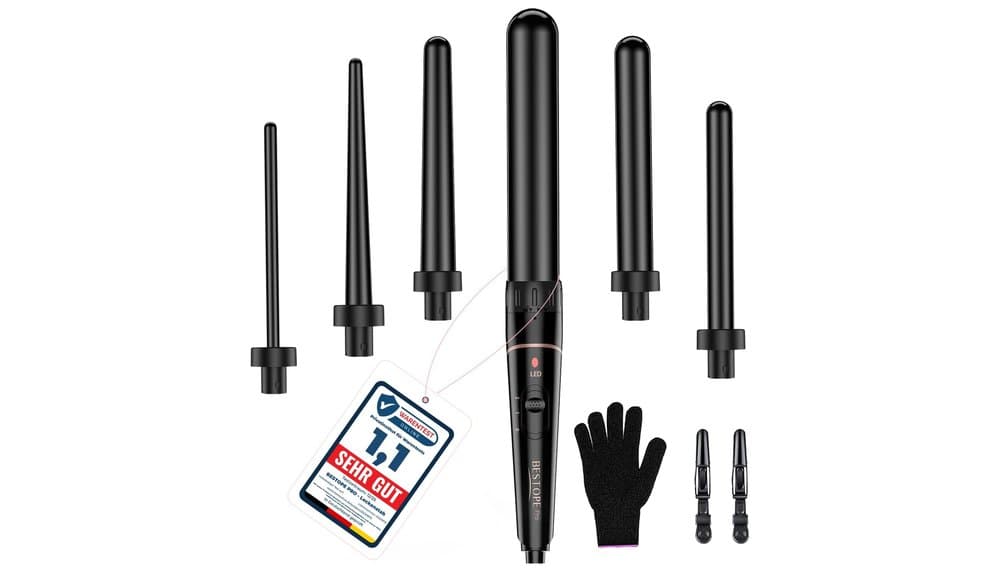
BESTOPE PRO 6 in 1 Curling Iron Set Review
Try six curl styles with one tool. Review examines the BESTOPE PRO set for effectiveness, hair health impact, and suitability for different hair types.