Do you think a curling iron is useless on short hair? Think again. It's often the secret tool to sculpt your cut, add movement to lengths that fall flat, or define pretty curls. With the right model and a few tips, you'll rediscover your mane. Let me guide you.
Key Points to Remember
- The barrel diameter must be smaller than the length of the hair strand for sharp and long-lasting curls.
- Prefer a device with multiple interchangeable barrels to mix textures for a natural result.
- Choose a curling iron with protective technologies (ceramic, tourmaline) and precise temperature control.
- The device's ergonomics (lightweight, balanced, swivel cord) are crucial for precision work on short hair.
- Adopt techniques like curling at the root and alternating winding directions to sculpt volume and movement.
Understanding Diameters: The Key to Suitable Curls
On short hair, the diameter of the ring is not a detail, it's everything. Take a 10 cm strand: if you wrap it around a ring with a 4 cm diameter, you simply won't have enough length to make a full turn. The result? A loose, poorly defined curl that falls out in a few hours. The trick is to choose a diameter that matches the actual length of your strands, not your haircut as a whole.
The Golden Rule of Diameter
Here is a simple principle: the diameter of the ring should be less than the length of the strand you are wrapping. For very short lengths (like chin-length bob), aim for rings of 19 to 25 mm. This is the perfect format for creating tight, neat little curls that last all day. Beyond 28 mm, you risk the curl not "taking," especially on the hair at the temples and nape, which is often shorter. Frankly, at this level of detail, a millimeter changes everything.
Why Variety in Sizes Wins
The trap is buying a curler with only one ring size. You end up with a uniform, sometimes artificial style. The ideal? A model that offers multiple interchangeable rings. For example:
- A 19 mm ring for very defined curls around the face.
- A 25 mm ring for the top of the head, where strands are often longer, for a more wavy effect.
- An oval ring can also be an ally on short hair to create more modern asymmetric waves than a perfect spiral.
This allows you to play with texture and avoid that overly rigid "beehive" effect. Mixing diameters on the same head is the secret to a natural result.
The Impact on Hold and Volume
A small diameter isn't just for creating the curl. It guarantees its hold. The shape is more compact, tighter, and therefore less susceptible to weight and gravity. This is crucial for fine hair that tends to fall flat. As a bonus, it generates immediate volume at the root, since the curl starts higher up. On a short bob, that's exactly what we're looking for: movement and bounce without weighing down the shape. Don't be afraid of really small rings; they are often what works best.
Heating Technologies to Protect Your Lengths
On short hair, every centimeter counts. Heat directly damages the lengths, with little room to trim damaged ends later. Choosing the right technology means protecting your hair's integrity today to prevent frizz and dryness tomorrow. It's not a luxury, it's prevention.
Ceramic and Tourmaline: The Winning Alliance
Forget bare metal irons that heat in spurts. For a curling iron for short hair, aim for barrels made of ceramic or tourmaline. Why? These materials distribute heat incredibly evenly across the entire surface. No more hot spots that scorch a strand! They smooth the hair's cuticle gently, providing immediate shine and a clean, defined curl. Tourmaline, a crushed semi-precious stone, has an extra benefit: it emits negative ions. It may sound technical, but the result is tangible: less frizz and reduced static. On a sleek bob, it's the difference between a professional result and a "static electricity" effect.
Temperature Control: Your Best Ally
A single button with a fixed temperature? That's often a bad idea. Your hair needs adapted heat. Precise temperature control is non-negotiable.
- Fine or color-treated hair: Start low, between 150°C and 170°C maximum. Excessive heat would "cook" them in seconds.
- Thick or virgin hair: You can go up to 180°C-200°C for the curl to form and hold. The ability to adjust also allows you to work with precision: a higher temperature on thick roots for volume, a lower one on fragile ends. This level of control is what makes the difference in the long run.
The Ionic Effect, That Little Extra That Changes Everything
Some curling irons feature an ionic function. Essentially, the appliance emits negative ions during styling. Their role? To seal the hair's cuticle, lock in moisture, and flatten the scales. In practice, your curls are more defined, less frizzy, and they shine naturally. The effect is particularly visible on curly or wavy hair that you want to tame without crushing it. Honestly, for an investment, this technology is truly worth it, as it directly combats the "straw-like" effect we all dread from heat styling.
Our Selection
We have selected three curling irons that represent very different approaches to styling. From an ultra-precise traditional curling iron to wireless automatic models, each targets distinct needs and expertise levels. The goal here is to give you a clear view of their features and what users say about them, to help you identify the one that best fits your routine.
| Product | Type & Diameter | Temperature | Key Strengths | Points to Consider |
|---|---|---|---|---|
| BESTOPE PRO 9mm | Traditional iron, 9 mm | 140°C to 230°C (15 settings) | Precision, total manual control, autonomy | Requires a technical learning curve |
| CFEN Automatic | Automatic wireless, - | 150°C to 200°C (6 settings) | Complete autonomy, ultra-portable, simple | Limited charging time and battery life |
| TYMO Curlpro | Automatic corded, 32 mm | 160°C, 190°C, 210°C (3 settings) | Accessibility for beginners, safety, speed | Less precision for small curls |
BESTOPE PRO 9mm Hair Curler
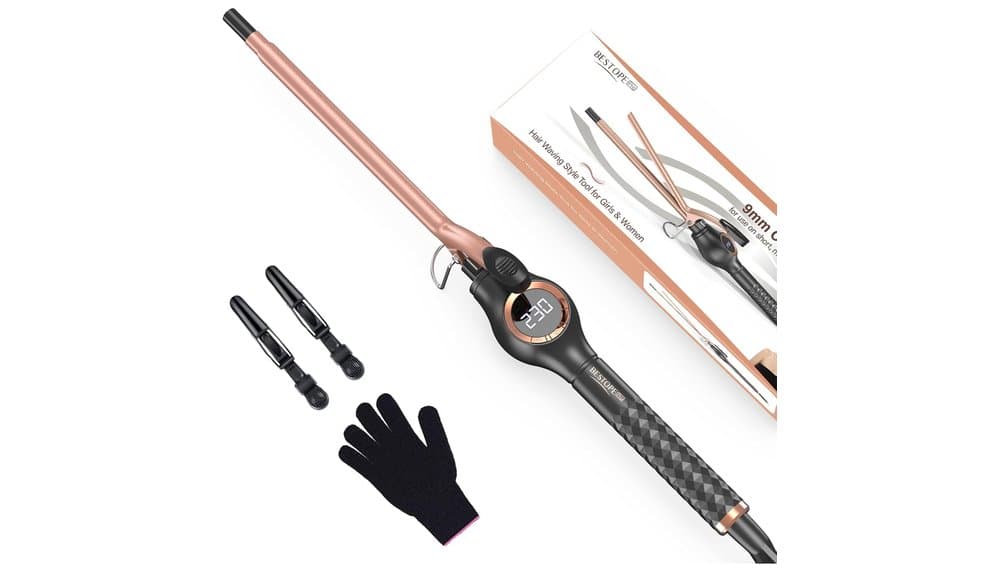
The BESTOPE PRO 9mm is a traditional curling iron, designed for tight curls and very precise ringlets. On paper, its specifications are those of a professional tool: an extremely wide temperature range (from 140°C to 230°C) with no less than 15 settings, which, in theory, allows for fine adaptation to all hair types, from the finest to the thickest. The fast heat-up in 30 seconds and ceramic tourmaline technology promise even heat distribution for long-lasting curls with less frizz. Users highlight several concrete advantages. They particularly appreciate the long 18 cm barrel, which allows treating a large amount of hair at once, speeding up the routine. The large LCD screen displaying the temperature in real time is also cited as a plus for precise control.
However, the main drawback, often mentioned in feedback, is the learning curve. Achieving uniform curls and avoiding kinks with such a small diameter requires practice and good coordination. Furthermore, the manual clamp requires some strength to maintain a constant closure, which can be tiring for some. This is clearly a tool for those who already master the technique or are willing to dedicate time to it for an ultra-customized result. Reviews also indicate that the anti-burn tip is effective, but one must remain vigilant with the barrel's heat.
CFEN Automatic Wireless Curling Iron
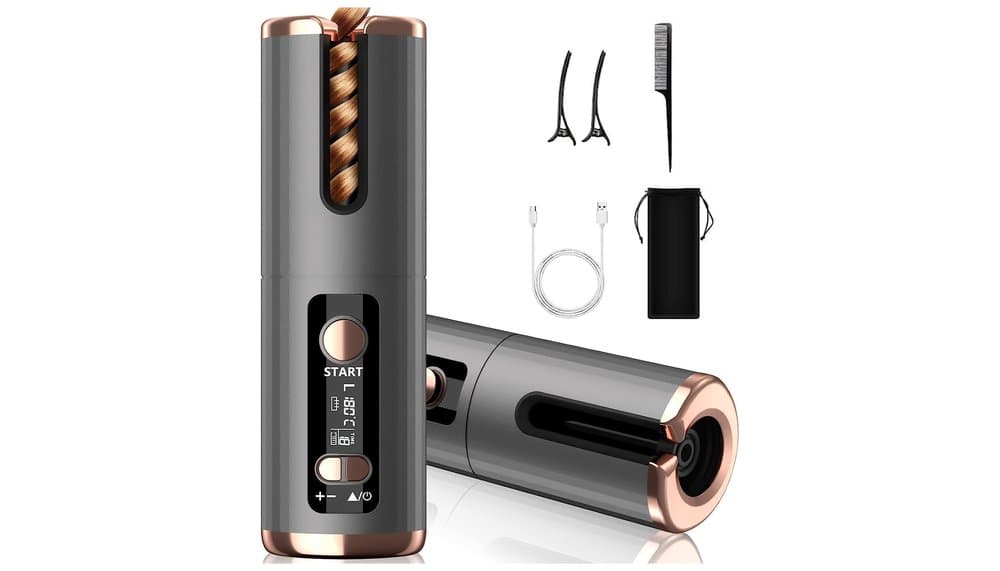
With the CFEN Automatic, we have a complete paradigm shift. This is a wireless automatic curling iron, the essence of freedom of movement. On paper, it offers maximum simplicity: insert a section of hair, and the device automatically wraps it, with an anti-tangle system meant to detect snagging and stop. Its portability is its main selling point: it weighs only 20 grams, recharges via USB, and fits in a handbag, making it an ideal candidate for travel or evening touch-ups.
The user experiences with this model are very instructive. Users who love it highlight its miracle aspect for creating curls quickly and cordlessly at home, as well as its perfect compactness for travel. They confirm it is very simple to use, even for a novice. But reviews also point out significant limitations related to its battery life. According to comments, a full charge takes about 4 hours and the battery life is limited (often mentioned for 10 to 15 curls), making it less suitable for a full styling session on thick or long hair in one go. It is therefore perfect as a secondary curling iron for touch-ups or for those with short or medium-length hair who prioritize on-the-go use above all.
TYMO Curlpro Automatic Curling Iron
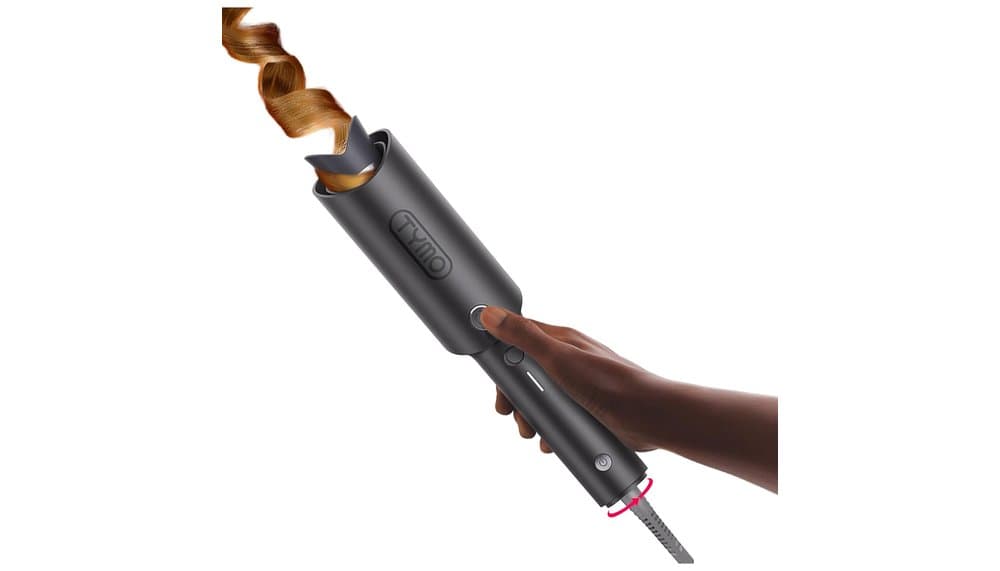
The TYMO Curlpro finds its balance between automatic technology and corded reliability. It is a corded automatic curling iron with a 32 mm diameter, ideal for wide, natural waves. Its specifications focus on simplicity and safety: automatic rotation in both directions, an anti-burn barrel, ultra-fast heat-up (10 seconds), and an anti-tangle system. This is the model that, according to reviews, seems to have the best overall reception with over 9000 ratings.
What stands out from the many customer reviews is its reliability for beginners. Users confirm that it makes creating curls accessible and almost foolproof, with an almost non-existent learning curve. The fast heat-up and the ability to create uniform curls without manual skill are its most praised qualities. However, this accessibility also has a downside. Reviews note that the size of the hair section to insert is limited to avoid jams, which can lengthen styling time for those with a large amount of hair. Furthermore, the 32 mm diameter is perfect for casual waves, but it does not allow for creating tight curls or ringlets. It is therefore the champion of automation without compromise on the quality of casual curls, but not the most versatile for all curl textures.
Choosing a Maneuverable Tool for Precision Work
With short hair, every movement must be precise. You work close to the scalp, on small sections, sometimes at difficult angles. If your curling iron is a baseball bat, you will quickly give up. Maneuverability is not a detail; it is the essential condition for achieving what you want without exhausting yourself.
Weight and Balance: Finesse Above All
Lift the tool in the store, make the motion. A good curling iron for short hair should weigh less than 400 grams, ideally around 300. Beyond that, your wrist tires after five minutes. But weight alone is not everything: check the balance. The bulk of the weight should be in the handle, not at the end of the barrels. Like holding a good pen, the tool should be an extension of your hand. A poorly balanced model forces you to strain, and you lose precision. It's exhausting and counterproductive.
The Swivel Cord and the Ergonomic Handle
Imagine yourself creating a curl at the root, behind the ear. If the cord is rigid, it pulls on the tool, twists it in your hand, and limits your movements. A 360° swivel cord is essential. It follows your motion without resistance. For the handle, choose an ergonomic shape, with grooves for your fingers. Avoid surfaces that are too smooth or too wide. Your grip must be firm and comfortable, even if your hands are slightly damp.
Control Placement: Everything Under Your Thumb
Nothing is worse than having to release your grip or turn the tool over to change the temperature mid-styling. The buttons must be placed strategically, most often on the top face of the handle, accessible with your thumb. Also check that they are not too sensitive to accidental touches to avoid changing settings by mistake. A backlit digital screen is a real plus for seeing your setting clearly under any lighting, without having to guess.
The Length and Shape of the Barrels
Even if you have chosen the right diameter (as we discussed), the shape of the barrels matters. For short hair, relatively short barrels (around 7 to 9 cm of heated length) offer better control than a very long barrel. You can also choose a model with conical barrels (wider at the base, finer at the tip). This allows you to wrap thicker sections at the base for a structured curl, and to work the ends with the fine part for a tight and precise wrap. It is the versatile tool par excellence.
See priceAdjusting Temperature to Your Hair Type
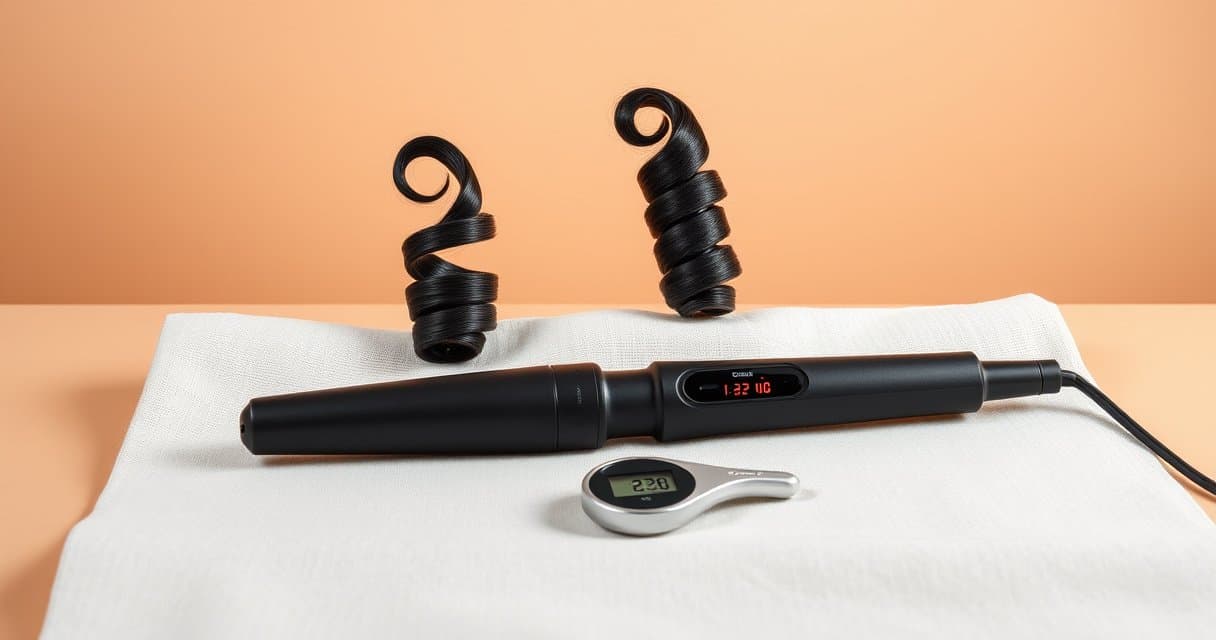
Turning the dial to the maximum setting by default is a guaranteed disaster. The right temperature isn't guessed; it's chosen based on your hair's nature. Especially on short lengths, where the margin for error is slim: overly aggressive heat damages the hair fiber in seconds and your cut loses all its dynamism. This is your first lever for beautiful, long-lasting, and healthy curls.
The Ideal Setting: A Question of Resistance and Diameter
Fine, fragile hair has a less dense structure. It takes shape quickly but burns just as fast. For this type, a range between 140°C and 170°C is more than sufficient. There's no need to go beyond that, as you risk breaking the curl and achieving a dry, brittle effect. Conversely, thick, coarse, or very resistant hair needs more power for the shape to set. In this case, aim for 180°C to 200°C. A good curling iron for short hair should offer a range of at least 5 temperature settings to cover these needs.
The Strand Test Technique
Don't trust the labels, trust your hair. Before starting your styling, take a discreet strand from the back of your head. Test your curling iron on a medium temperature. If the curl doesn't hold or falls out within a few minutes, increase in increments of 10°C. Conversely, if you hear a crackling sound, see smoke, or smell an acrid odor, lower it immediately. That's your hair crying out. This 2-minute routine changes everything.
The Importance of Heat Consistency
This is the point many overlook. A tool that takes a long time to reach its temperature or loses degrees between curls is a nightmare. Your first curls will be perfect, the next ones limp. Aim for a curling iron with fast heating (less than 30 seconds) and proven thermal stability. This guarantees that each strand, from the first to the last, receives exactly the same dose of heat. The result is uniform and professional.
For Colored or Very Damaged Hair: Absolute Caution
Frankly, if your ends are already brittle or if you've just colored your hair, you need to be extra vigilant. Color, especially bleaching, alters the hair's structure and makes it more vulnerable to heat. In this case, never exceed 150°C. And above all, never forget a quality thermal protective spray. It's non-negotiable. It's the shield that allows you to enjoy the style without sacrificing the health of your mane.
Techniques for Varying Styles and Volume
A curling wand isn't just for making perfect spirals. It's a veritable magic wand for sculpting your short cut and giving it character in no time. The trick? It's in the way you wrap the section and treat the roots.
Root Volume: The Foundation of a Lift-Off Cut
Nothing is worse than a curl plastered to the skull. For an airy and natural effect, work on the root before the ends. Take a fine section, place the curling wand about 2 cm from your scalp and wrap it for a very short length, only on the first few centimeters. Hold for a few seconds, release gently. This technique, called "root curl", immediately lifts the hair and creates structure. For a more radical effect, you can even wrap the section horizontally, upwards. The result is stunning.
Alternating Wrapping Directions for a Natural Effect
Overly uniform curls look "styled with a clamp". For a tousled, modern style, change direction with each section. Wrap one section backward, the next forward, another downward. This intentional irregularity gives incredible movement and avoids a too-rigid "Egyptian braid" effect. On short hair, it also adds the illusion of thickness, as the light reflects differently on each curl.
Creating Loose Waves Without Large Barrels
You don't have large barrels? No problem. For soft waves on a bob, don't take sections that are too thick. Wrap each section on only half the length of the barrel, starting from the mid-lengths and avoiding the ends. Hold for five seconds, then slide the tool toward the ends while slowly unwrapping it. This is a "slide-out" technique that gives a relaxed beach wave effect, perfect for everyday looks.
The Finishing Touch That Makes All the Difference: Structure with Fingers, Not a Brush
The big mistake is to brush everything out with a round brush after styling. You'll ruin everything. Let the curls cool down completely. Then, simply run your fingers through the roots to aerate them and gently separate a few curls with your fingertips. To set everything, use a light mist of texturizing spray, held 30 cm away, on the lengths. This will give grip, hold, and most importantly, preserve that precious volume and movement you just created. Forget strong hairspray; it weighs everything down on short lengths.
Conclusion
So, you see? A curling iron for short hair is not a secondary accessory. It is a creation tool.
Choosing the right barrel diameter, protective technology, and good handling changes everything. With the right techniques, you sculpt your haircut every day.
Move to practice. Test, adjust, have fun. Your short hair has incredible potential; you just need to reveal it.
Frequently Asked Questions
Which curler diameter should I choose for short hair?
The ring's diameter must be less than the length of the strand you are curling. For very short bobs (chin-length), aim for rings of 19 to 25 mm for neat, long-lasting curls.
How to get volume on short hair with a curler?
For immediate root volume, place the curler 2 cm from the scalp and only wrap the first few centimeters of the strand. This technique creates structure and lifts the hair at the base.
What temperature for curling fine and short hair?
For fine or bleached hair, use a low temperature between 150°C and 170°C maximum. Excessive heat could damage them quickly and give a dry effect.
Why use a curler with multiple ring sizes on short hair?
Interchangeable rings (e.g., 19 mm and 25 mm) allow you to mix textures and avoid an overly uniform effect. This helps you adapt the diameter to the different strand lengths within the same short haircut.
How to protect short hair with a curler?
Prefer a curler with ceramic or tourmaline rings for even heat distribution and always use a thermal protection spray before styling, especially on colored hair.
How to create loose waves on short hair without a large ring?
For soft waves, wrap the strand from its mid-length onto a medium ring, hold for a few seconds, then slide the appliance towards the ends while slowly unwinding it.
Free content, no sponsors — Our editorial process is fully independent and receives no brand funding. Some links are affiliate links: if you purchase through them, we earn a small fee, at no additional cost to you.
Guides you might like
Automatic Loopers: Buying Guide
Get effortless, long-lasting curls. Our guide helps you choose the right automatic curling iron for your hair type and perfect results.
Curly Hair Masks: Buying Guide
Transform your curl routine. Discover how a hydrating curl mask deeply nourishes, defines, and tames frizz for effortless, beautiful curls.
Guide To Choosing A Pro Hair Dryer
Struggling with dull, frizzy hair? A professional hair dryer can transform your routine. Learn how to choose the right one without overspending.
Articles you might like
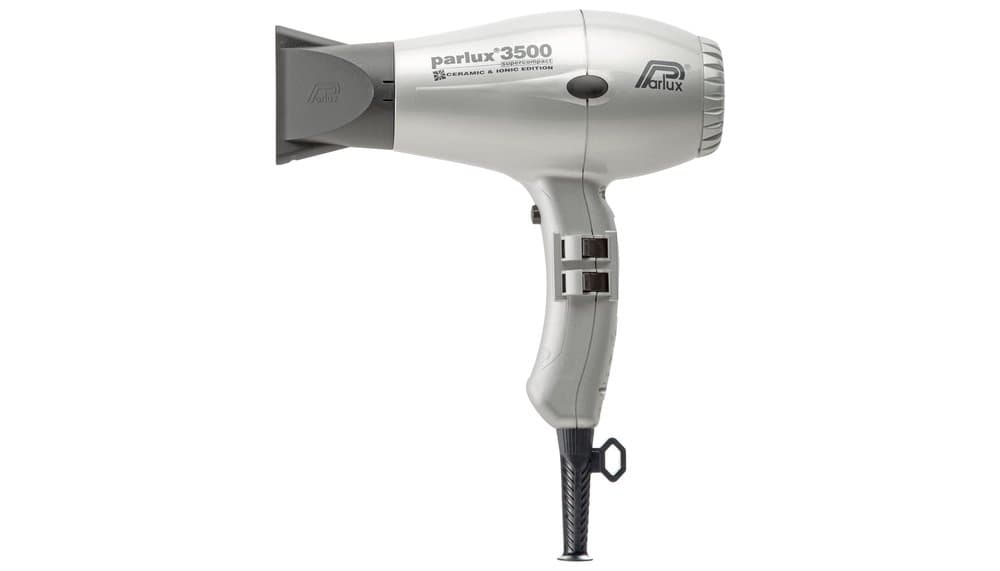
Parlux Supercompact 3500 Hair Dryer Review and Test
Powerful Parlux Supercompact 3500 hair dryer review: Professional ionic & ceramic performance for fast, healthy drying on all hair types.
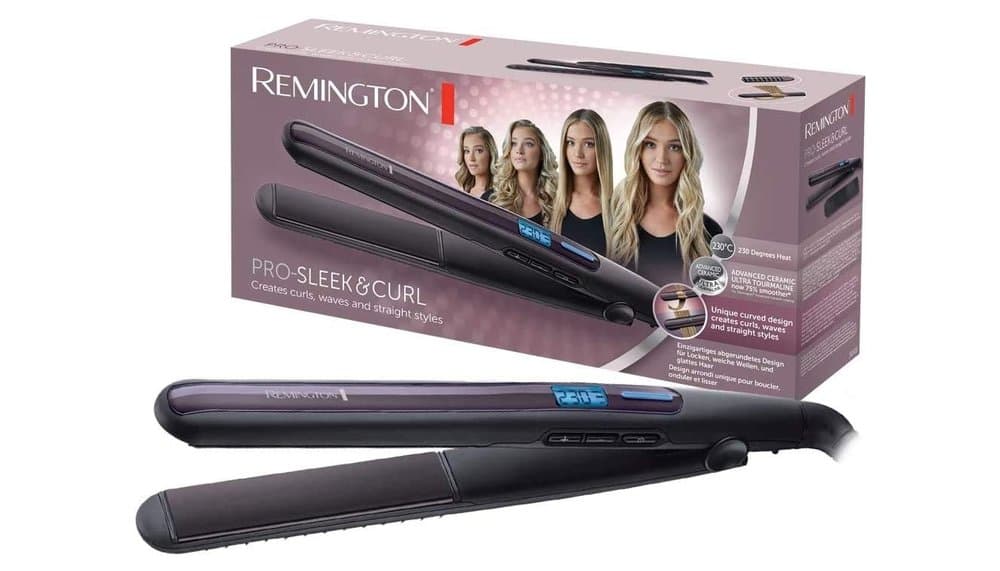
Remington S6505 Sleek&Curl 2-in-1 Hair Straightener Review
Review: Does the Remington S6505 2-in-1 straightener and curler protect hair health while performing well on all hair types?
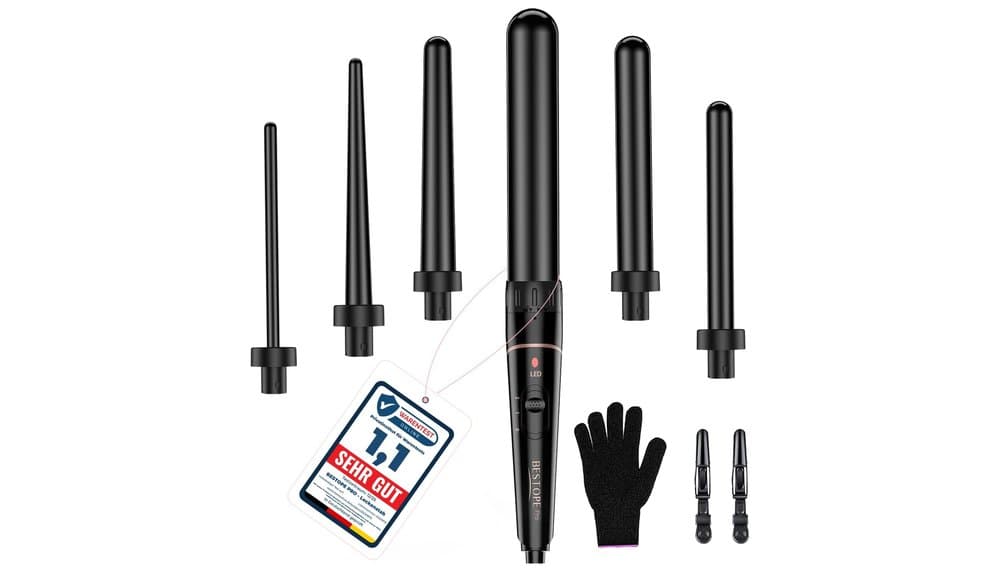
BESTOPE PRO 6 in 1 Curling Iron Set Review
Try six curl styles with one tool. Review examines the BESTOPE PRO set for effectiveness, hair health impact, and suitability for different hair types.