Tired of struggling against your frizz or rebellious curls? The steam straightener might just be the revolution your hair has been waiting for. Honestly, it's not just a simple straightening iron: it's a completely different, much gentler approach that promises smooth results without tormenting your hair fiber. Let's look together at how to choose the right one to finally say goodbye to dry hair and unruly strands.
Key Points to Remember
- The steam straightener smooths by hydrating the hair fiber from the inside, thus limiting damage.
- The choice of plates (ceramic, tourmaline, titanium) is crucial and depends on your hair type.
- Precise temperature control is essential to adapt the straightening to the fragility of your hair.
- Technique, particularly pre-drying and slow passes on fine sections, guarantees an optimal result.
- It is gentler but slower than a traditional straightener, ideal for dry, damaged, or humidity-rebellious hair.
Understanding the Principle and Benefits of Steam Straightening
You are familiar with traditional heat straightening, which flattens the hair fiber. The steam straightener, however, works on a radically different principle: it combines the heat of the plates with a fine, steady jet of water vapor. This steam is the key. It instantly penetrates the hair's cuticle at the very moment the plates pass over it. The result? The heat diffuses from the inside out, and the steam envelops the hair to reshape it without causing damage. It's less about crushing and more about gentle reshaping.
Steam, a Hydrating Ally
Contrary to what one might think, the steam is not there to "wet" the hair. Its role is to create a thermal and hydric shock that slightly opens the hair's scales. This allows for deep hydration during the straightening process itself. With a classic flat iron, you drive out moisture; with a steam iron, you inject it. The long-term difference for hair health is colossal. Your hair retains its softness, its natural shine, and is much less prone to breakage.
Tangible Results: Softness, Shine, and Hold
Frankly, this is where it all comes together. For thick, very curly hair, steam allows for a smooth, uniform, and long-lasting straightness without having to go over the same section ten times. The steam "relaxes" the fiber deeply. For fine or damaged hair, the advantage is even more obvious: goodbye to the dry, dull "straw-like" effect. The hair is sleek, luminous, and frizz is considerably reduced, especially in humid weather. You often gain 30 to 50% more hold compared to a classic straightening.
Who Is It Really For?
Everyone can benefit, but some hair types see an immediate and transformative advantage.
| Hair Type | Main Benefit of Steam Straightener | Point of Caution |
|---|---|---|
| Very Curly / Coily Hair | Easier and deeper straightening, fewer passes needed. | Opt for a model with a high steam output (min. 30g/min). |
| Thick / Unruly Hair | Prolonged hold, notable time savings. | Check the plate width and fast heat-up time. |
| Fine / Damaged / Colored Hair | Intense hydration, no "fried" effect, preserved shine. | Use steam sparingly and at a low temperature (around 170°C). |
The best steam straightener for you will therefore depend on this initial diagnosis. The trick? Before you commit, do a test on a section of hair: set the device to a medium steam flow and a temperature suitable for your hair. Pass over it once, slowly. Observe. The section should be smooth, soft to the touch, and not stiff or frizzy. If so, you've found your method!
Which Plate Technology to Choose for Your Hair?
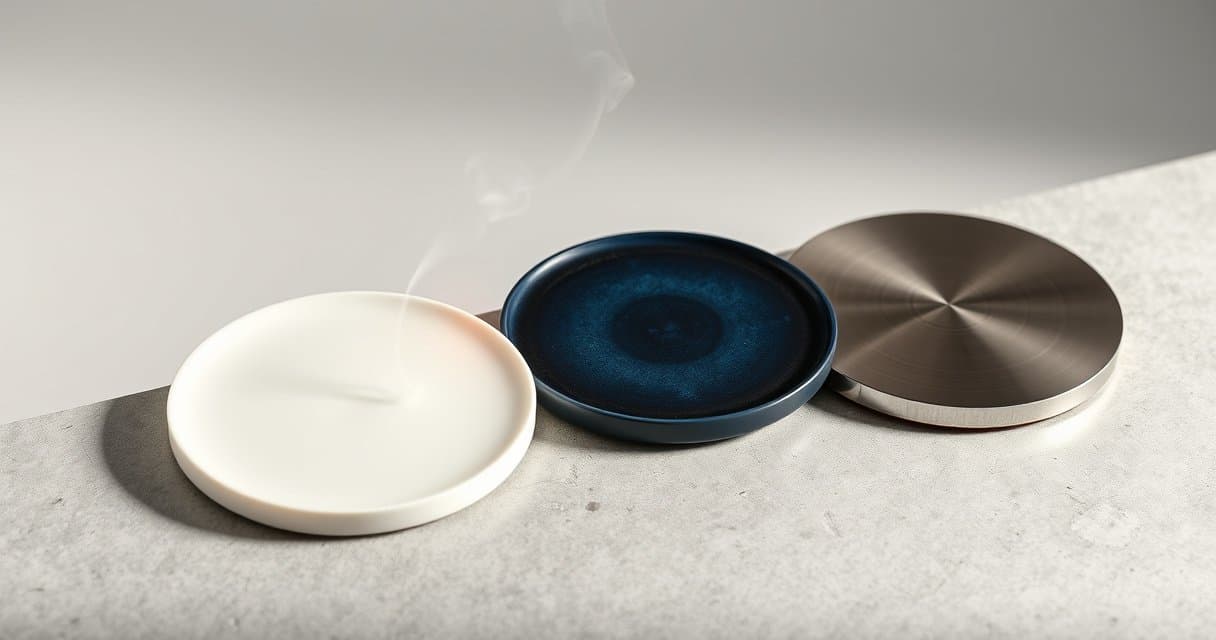
It's the heart of the appliance, the point of direct contact with your hair. And believing all plates are equal is a classic mistake. Their composition changes everything: the quality of the glide, the distribution of heat, and above all, the condition of your hair after use. Let's break it down.
Ceramic, the Universal Ally (But Not Magical)
Ceramic emits gentle, even heat. It's an excellent basic choice, especially if your hair is fine, normal, or slightly damaged. It limits hot spots that burn the hair fiber. However, on very thick or extremely unruly hair, it can lack a bit of punch. Its strength? A price that's often very affordable. Its flaw? It can wear out faster if it's not good quality. For a first steam straightener, it's often a good bet.
Tourmaline, the Queen of Shine
Here, we move up a level. Tourmaline is a crushed mineral, often integrated into a ceramic coating. Its great talent? It emits a significant amount of negative ions when heated. These ions neutralize static electricity (goodbye frizz!) and seal the hair cuticle for an immediate mirror-like effect. If you're looking for absolute shine and your hair is thick or curly, steer towards this technology. Honestly, the difference in the finish is often visible to the naked eye.
Titanium, the Brute Force (to Handle with Care)
Titanium is the champion of conductivity. It heats up extremely quickly and evenly, and maintains its temperature without flinching even on very dense hair. It's the professional choice par excellence. But be careful, it's a double-edged sword. This formidable efficiency can be too aggressive for fine, brittle, or color-treated hair. You absolutely must master the temperatures (never exceed 180°C on fragile hair). For a perfect blow-dry on Afro-textured or very thick hair, it's sometimes the only truly effective solution.
What About Ionic Coatings?
Often, you'll read "ionic plates." This is generally an additional coating (on ceramic, for example) that boosts ion emission. It's a real plus, especially combined with steam, as it helps lock hydration inside the hair. Don't make this technology an absolute criterion, but consider it a very welcome bonus, especially if you live in a humid climate.
To help you navigate, here is a quick overview:
| Plate Type | Ideal for... | Recommended Temperature | Note |
|---|---|---|---|
| Ceramic | Fine to normal, slightly damaged hair. Beginners. | 150°C - 190°C | Gentle heat. Can snag if the coating is poor quality. |
| Ceramic + Tourmaline | Curly, thick hair, seeking shine and anti-frizz. | 170°C - 210°C | The best value for a professional result. |
| Titanium | Very thick, unruly, coily hair. Intensive use. | 180°C - 230°C | Perfect glide. Avoid on fine or damaged hair without precise control. |
The best steam straightener for you will therefore take this alchemy into account: the power of the steam combined with the right plate technology. Don't forget the shape! Plates rounded at the ends will be simpler and safer for creating waves, while well-angled plates will make root straightening easier.
Our Selection
Choosing the right steam straightener can be a real headache. Between promises of perfect straightening, care, and speed, it's easy to get lost. To help you see more clearly, we analyzed three popular models based on their technical specifications and user community feedback. Here is our comparative selection.
| Product | Plate Type | Steam Function | Max Temperature | Steam Autonomy | Key Strengths |
|---|---|---|---|---|---|
| Demeliss Saint Algae Titanium | Titanium | Yes, integrated 40 ml tank | 230°C | > 20 min | Intense straightening, integrated comb, 5 heat levels |
| Steampod Pro Platinum | Ceramic | Yes, adjustable steam technology | 230°C | Not specified | 10 settings, LCD screen, auto-off safety, universal voltage |
| Demeliss Saint Algue (Set Cherry) | Titanium | Yes, integrated 40 ml tank | 230°C | > 20 min | Complete set (mat), hydrating finish, limited edition |
Demeliss Saint Algae Titanium Steam Straightener
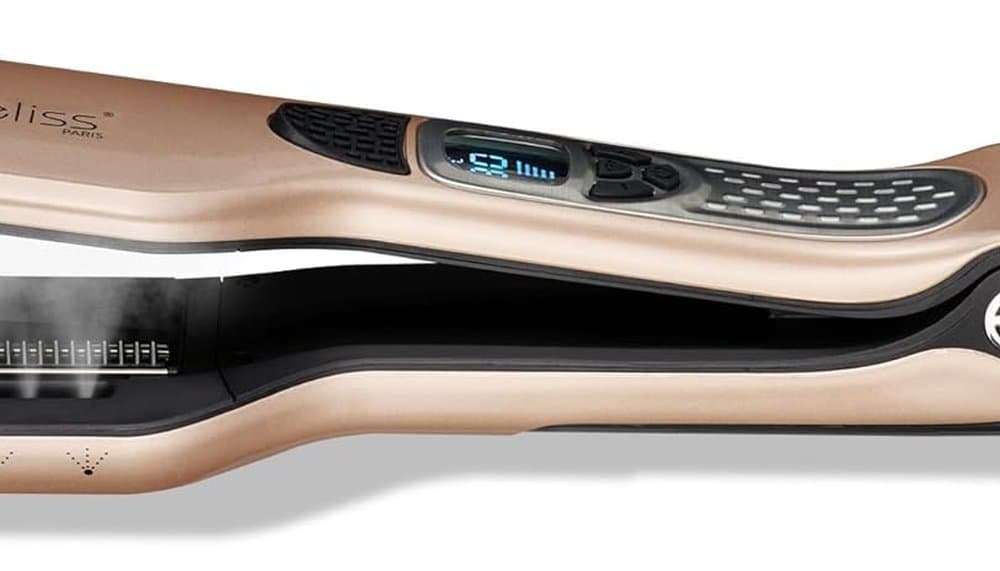
This steam straightener focuses on power and efficiency. Its titanium plates are designed to glide easily even on thick or very curly hair, promising professional straightening. According to the specifications, its main asset is the integrated 40 ml steam tank, which would allow for more than 20 minutes of continuous use, a point often highlighted by users with long or dense hair. The presence of a removable comb is also a noted plus for guiding strands and achieving a uniform result.
However, community feedback highlights some limitations. Its relatively light weight (120g) is appreciated for maneuverability, but some users would have preferred a more robust feel. The temperature range, while covering standard needs (5 levels from 150 to 230°C), is less extensive than some competitors. Finally, the absence of a digital display to see the exact temperature is a recurring point in the comments, requiring a more "estimated" adjustment.
Steampod Pro Platinum Hair Straightener
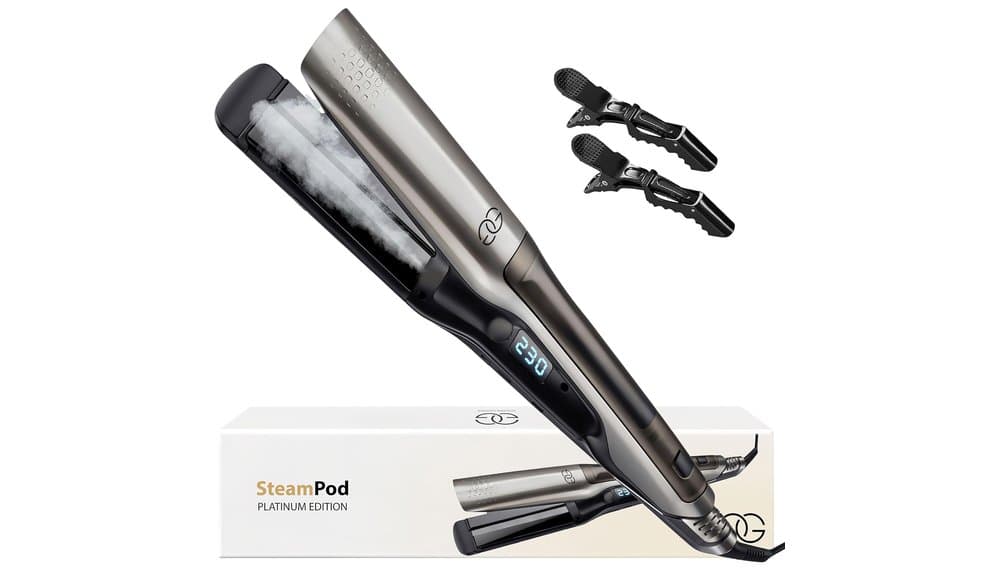
The Steampod Pro positions itself as a high-end and versatile device. Its technical arguments are solid: 10 temperature settings (from 100 to 230°C) displayed on an LCD screen, allowing for very fine customization suitable for all hair types, even the finest or most fragile. User reviews regularly praise the homogeneous heating quality of the ceramic plates, as well as the safety features like automatic shut-off and plate lock for storage.
The points of caution raised by the community mainly concern its weight (650g), significantly higher than other models, which can make long straightening sessions more tiring for the wrist. Although steam technology is present, the precise autonomy is not detailed by the manufacturer, unlike the Demeliss models. Some feedback also mentions a learning curve to perfectly master the steam function and achieve the smoothest possible result.
Demeliss Saint Algue Titanium Steam Straightener Set (Cherry Chérie)
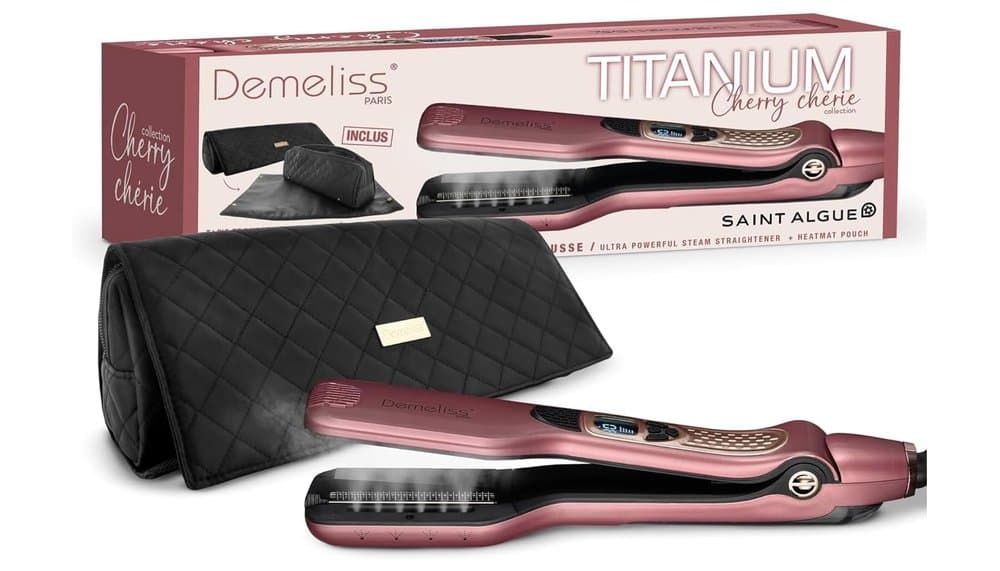
This is a "set" version of the first model, focused on the complete user experience. It shares the same fundamental technical characteristics: titanium plates and an XL 40 ml steam tank for extended autonomy. Its real plus, according to the presentation, is the inclusion of a 2-in-1 mat (surface protector and storage case), a practical touch highly appreciated according to early feedback for protecting your work surface and transporting the device safely.
Feedback on this specific model is still limited, but it tends to confirm the strengths and weaknesses of the Demeliss Titanium technology. Users note the straightening power and the hydrating effect promised by the steam. On the other hand, as with its counterpart, the interface remains basic (without a screen) and some regret the lack of precision in heat adjustment. The set presents it as a more "premium" object, but the core performance seems similar to the standard Saint Algae model.
Practical Features That Make a Difference Day-to-Day
Technology is one thing. But it's in daily use, in the morning before leaving or in the evening when you're in a rush, that certain functions become indispensable. Others are just nice gadgets. Let's learn to tell them apart.
Temperature Regulation: Your Essential Safeguard
A dial with only three LEDs (low/medium/high)? That's insufficient. Really. Your hair's mood changes with time, coloring, and seasons. Having precise adjustment, in increments of 5 or 10 degrees, changes everything. For fine or color-treated hair, you should never exceed 160-170°C. For thick, stubborn hair, you might need to go up to 200°C. Without this control, you're playing sorcerer's apprentice with your hair fiber. It is, in my opinion, the number one criterion for safe and long-term use.
Autonomy and the Filling System
Nothing is more annoying than a water tank emptying right in the middle of your straightening session. Look for a capacity of at least 50 ml, which will allow you to last 20 to 30 minutes of continuous straightening. That's usually enough. But the real trap is the refilling. A small hole requiring a provided pipette (quickly lost) is a nightmare. A wide hatch that allows filling directly under the tap is a monumental time-saver. Mentally test this action before buying.
The Length and Mobility of the Cord
We rarely think about it, but a 1.5-meter cord forces you to stay glued to the outlet. A 2.5 to 3-meter cord, swiveling 360°, gives you total freedom of movement in front of your mirror. It's the kind of detail that transforms a chore into a pleasant moment. And if the cord is braided, even better: it will tangle less.
See priceHeat-Up Time: The Moment of Truth
Waiting five minutes in the morning is a long time. Some models claim heat-up in 30 seconds, but that's often just to reach a minimum temperature. For stable, even heat, count on one to two minutes. That's reasonable. If the device takes more than three minutes, frankly, it will end up at the back of the closet.
Alerts and Safety Features
A light indicating the device is ready is good. A safety lock to prevent mishandling and a blast of scalding steam is better. An automatic shut-off after 30 or 60 minutes of inactivity is also a reassuring feature, especially if you have children or are forgetful. It's not marketing, it's peace of mind.
The best steam straightener isn't necessarily the one with the most buttons, but the one whose features match your actual routine. Do you prefer an all-in-one device with interchangeable plates, or a simple, quick-to-store model? The answer to this question is often more important than an impressive list of specs.
A Gentler Smoothing: Advantages and Limitations vs. the Classic Straightener
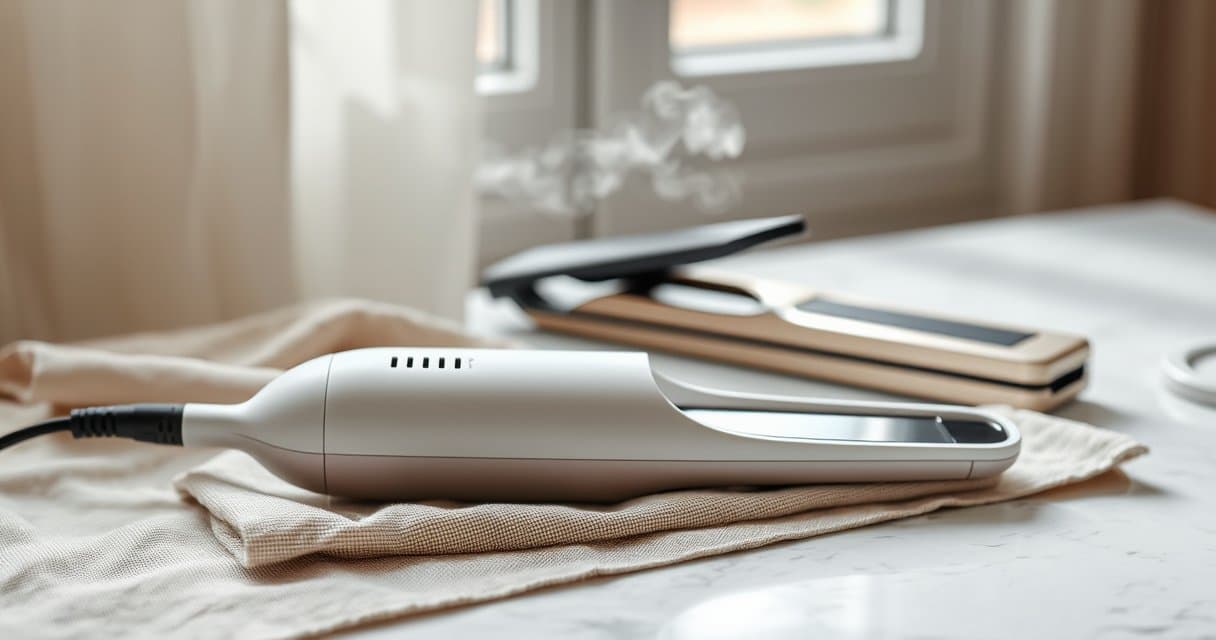
It's the big question, isn't it? Should you really switch to steam, or is your good old classic straightener still up to the task? The answer isn't binary. It all depends on what you're looking for: brute-force effectiveness or preserving your hair's health. Let's clearly lay out the pros and cons.
The Undeniable Strengths of the Steam Straightener
The major advantage, and it's a big one, is the absence of thermal shock. A classic straightener dries hair out by crushing the fiber. Steam, on the other hand, gently penetrates the cuticle to relax the hair's hydrogen bonds from the inside. The result? Smoothing achieved at a temperature often 20 to 30°C lower. For colored, weakened, or dry hair, it's a game-changer: less breakage, fewer split ends, and preserved natural shine.
Another strong point: longevity and resistance to humidity. Steam sets the shape much better than dry heat. If you have tight curls or very thick hair, you're familiar with that "puffiness" phenomenon two hours after a classic straightening session. With steam, the result easily lasts 2 to 3 days, even in humid weather. It's liberating.
The Limitations to Know (To Avoid Surprises)
But let's be honest, the steam straightener is not a universal magic tool. Its first limitation is time. The process is a bit slower: you need to work section by section, often while holding a steam button. Forget about a 10-minute express blowout. It's a more deliberate routine.
Secondly, it is less suited for ultra-smooth, "flat-ironed" styles. If you're aiming for perfectly sleek, almost glass-like hair, a classic ceramic/tourmaline iron at high temperature will often be more effective in a single pass. Steam favors a hydrated and natural smoothness, sometimes with just a little bit of movement.
Finally, it requires a bit of logistics. Filling the reservoir, cleaning it regularly to prevent limescale buildup, waiting for it to cool down before putting it away... These are small hassles that don't exist with a classic iron.
So, Which One to Choose?
To help you decide, here's a quick comparison:
| Why Choose Steam? | When the Classic Option Remains Relevant |
|---|---|
| You have dry, damaged, colored, or stubborn frizzy hair. | You have naturally straight or fine hair and are only looking for a perfect finish. |
| The long-term health of your hair is your absolute priority. | Speed of execution is crucial for your morning routine. |
| You live in a humid climate and your straightening doesn't last. | You like creating waves or curls with your iron and need extreme maneuverability. |
| You hate the "flat" and dry look a traditional straightening can give. | You want no specific maintenance (no reservoir to manage). |
| You straighten your hair frequently (more than twice a week). | Your budget is very limited. |
The best steam straightener will therefore be the one that matches your patience, your hair type, and your willingness to care for your hair fiber. It's an investment in longevity, not in speed.
Mastering the Right Technique and Settings for a Perfect Result
Having a good tool is one thing. Knowing how to use it is the whole art of hair straightening. You can own the best steam straightener on the market, if the technique isn't there, the result will be disappointing, even counterproductive. Don't get discouraged: the first attempts are often imperfect. With these few golden rules, you'll become a pro.
Preparation: The Secret Step You Must Not Skip
Everything starts before you even turn on your straightener. Your hair must be 90% dry. Not soaking wet, because the steam will mix with the water and won't work. Not completely dry either, because you'll lose the hydrating benefit. Think about using a microfiber towel to absorb excess water without aggression.
It is imperative to apply a heat protectant. This is non-negotiable. Choose a light one, in a spray or light cream formula, so as not to weigh down the hair or clog the plates. It forms a shield and aids in glide. Take a hazelnut-sized amount in your hand, spread it on the lengths and ends, avoiding the roots.
Temperature Setting: The Key to Everything
This is the most common mistake: wanting to go too high, too fast. Steam works differently.
- Fine or bleached hair: start at 160°C. That's plenty.
- Normal or colored hair: 180°C is an ideal temperature.
- Thick or very curly hair: you can go up to 200-210°C, but test at a lower setting first.
Frankly, there's no need to rush to the max setting. A temperature that's too high with steam can create an overload of hot moisture, giving a "wet" then frizzy effect. The idea is to find the minimum effective temperature.
The Movement: Slow, Precise, Section by Section
Forget quick, broad strokes. Here, patience pays off.
- Section your hair with clips. Work on thin sections (2-3 cm wide maximum). The thinner the section, the more radical the straightening will be.
- Place the section between the plates, as close to the roots as possible without touching the scalp.
- Activate the steam (continuous or pulsed button depending on your model) and slide slowly the iron down to the ends. Count about 5 to 8 seconds per pass. Do you hear a slight hissing sound? That's a good sign, the steam is working.
- Do not repeat the pass unnecessarily on the same section. Once is often enough. If an area resists, check the temperature before going over it again.
A little friend's tip: for the ends, squeeze the iron just a tiny bit less firmly. They are more fragile and need less pressure than penetrating steam.
The "Cool Shot" and Finishing
If your straightener is equipped with one, use the cool air function (cool shot) at the end of a pass on a section, or on the whole head after straightening. This burst of cold air closes the hair's cuticles, seals in the hydration provided by the steam, and sets the shape for longer hold. It's the final touch that makes all the difference between a good and an excellent result.
Then, let your hair cool down before touching or brushing it. Wait two minutes, for the structure to stabilize. You'll see, the difference in shine and softness is striking.
Conclusion
The steam straightener is much more than just a styling tool. It's an ally for achieving smooth yet preserved hair.
Choosing the right model and mastering its use makes all the difference. It transforms an often aggressive routine into an effective treatment.
Take the time to properly select your device according to your needs. Apply the right techniques. Your hair will thank you with its renewed shine and softness.
Happy discovering, and see you very soon for more tips!
Frequently Asked Questions
How does a steam straightener work?
A steam straightener combines the heat of plates with a jet of water vapor that penetrates the hair cuticle, allowing the hair to be straightened from the inside with less heat than a traditional straightener.
Which steam straightener for damaged hair?
For damaged hair, choose a steam straightener with a low temperature setting (around 160°C) and prioritize ceramic plates for a gentler straightening that preserves the hair fiber.
Does steam straightening damage hair?
No, steam straightening is less aggressive because it uses a lower temperature and hydrates the hair fiber during straightening, which significantly reduces damage compared to a classic flat iron.
What temperature to straighten curly hair with steam?
For very curly or thick hair, a temperature between 200°C and 210°C is generally effective, but it is recommended to start with a lower setting for a first try.
Should you apply product before using a steam straightener?
Yes, it is essential to apply a heat protectant treatment before straightening to create a shield against the heat and facilitate the glide of the iron.
How long does a steam straightening last?
A straightening done with a steam straightener easily lasts 2 to 3 days thanks to the action of the steam, which better sets the shape and resists humidity.
Free content, no sponsors — Our editorial process is fully independent and receives no brand funding. Some links are affiliate links: if you purchase through them, we earn a small fee, at no additional cost to you.
Guides you might like
Automatic Loopers: Buying Guide
Get effortless, long-lasting curls. Our guide helps you choose the right automatic curling iron for your hair type and perfect results.
Curling Short Hair
Rediscover your short hair! Learn how a curling iron sculpts your cut, adds movement, and defines curls with the right technique and barrel size.
Curly Hair Masks: Buying Guide
Transform your curl routine. Discover how a hydrating curl mask deeply nourishes, defines, and tames frizz for effortless, beautiful curls.
Articles you might like
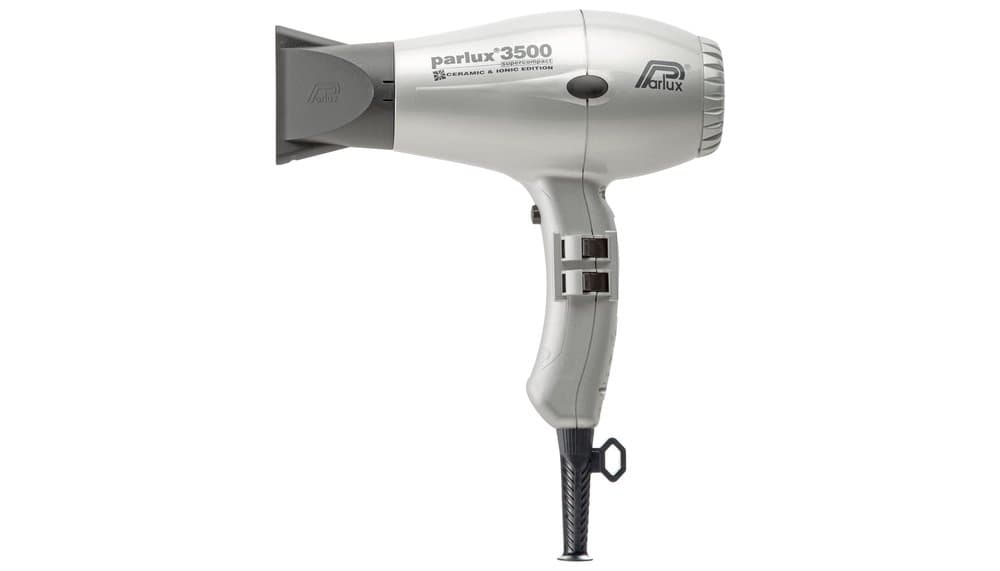
Parlux Supercompact 3500 Hair Dryer Review and Test
Powerful Parlux Supercompact 3500 hair dryer review: Professional ionic & ceramic performance for fast, healthy drying on all hair types.
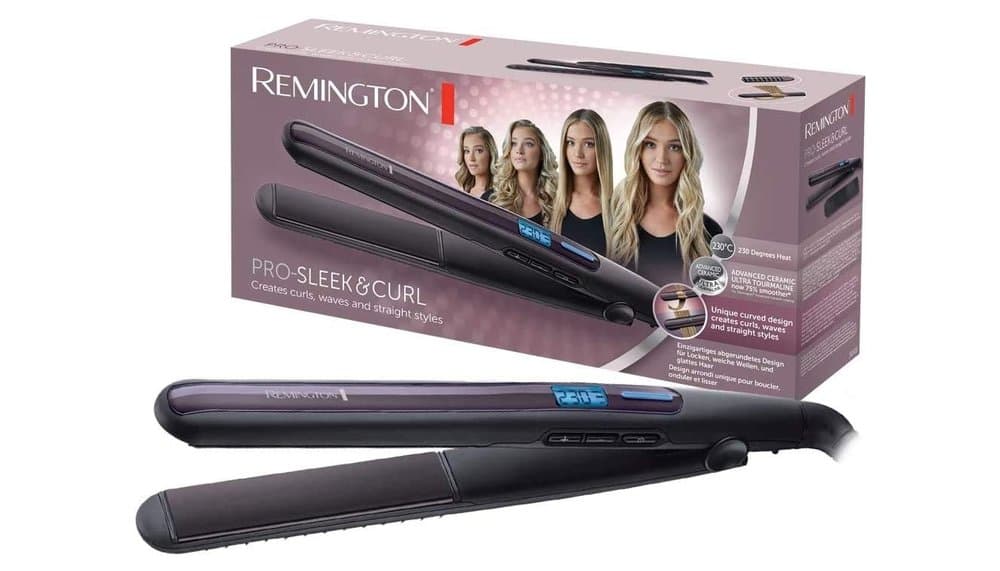
Remington S6505 Sleek&Curl 2-in-1 Hair Straightener Review
Review: Does the Remington S6505 2-in-1 straightener and curler protect hair health while performing well on all hair types?
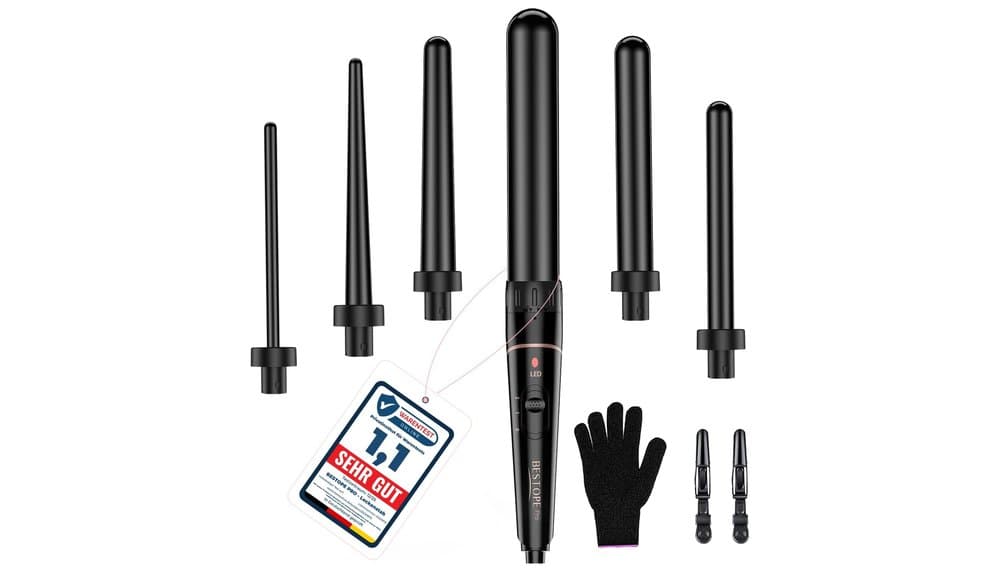
BESTOPE PRO 6 in 1 Curling Iron Set Review
Try six curl styles with one tool. Review examines the BESTOPE PRO set for effectiveness, hair health impact, and suitability for different hair types.